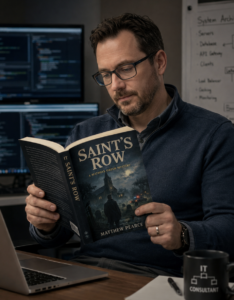
IT managers live in a world where small details matter. A missed alert, an ignored log, a weak access point, a broken handoff, or a pattern no one takes seriously can become the reason everything falls apart. That is one reason A Mathias Green Mystery: Saint’s Row has the kind of layered storytelling that can pull an IT manager in from the first stretch of tension. It is not just about a mystery. It is about systems, pressure, unseen weaknesses, and the people who know something is wrong before everyone else is ready to admit it.
For readers who enjoy suspense with intelligence behind it, Saint’s Row offers more than entertainment. It gives the mind something to track. IT managers are trained to look for inconsistencies, hidden causes, and failures beneath the surface. They understand that the real issue is rarely the loudest issue. In technology, a major outage can begin with one overlooked dependency. In a mystery, a life-altering secret can begin with one overlooked clue.
That makes Saint’s Row a strong fit for readers who appreciate stories where every detail may matter. It is the kind of novel that feels especially appealing to professionals who spend their days managing risk, reading between the lines, and trying to keep complicated environments from collapsing. For those searching for intelligent murder mystery books with atmosphere, tension, and a main character built around observation, this Mathias Green mystery gives readers something they can sink into.
The IT Manager’s Mind Is Built to Notice Patterns
A strong IT manager does more than respond to problems. They recognize patterns before those patterns become expensive. They notice when the same ticket keeps coming back. They pay attention when a system behaves differently on Tuesday than it did on Monday. They understand that patterns are often the first sign of deeper trouble.
That same mindset fits naturally into a mystery like Saint’s Row. A good mystery depends on the reader’s ability to watch carefully. The clues are not always obvious. The danger is not always announced. The truth is often buried under routine, personality, fear, silence, or bad assumptions. For an IT manager, that structure feels familiar.
Modern IT leadership is increasingly tied to analysis, operational awareness, and business risk. Publications like CIO’s IT Leadership coverage continue to focus on how technology leaders must guide organizations through fast change, complex systems, and strategic decision-making. That same leadership mindset makes an IT manager a sharp reader of fiction that depends on structure and consequence.
In Saint’s Row, the appeal comes from watching how pieces connect. The reader is not simply following a plot. The reader is building a mental map. That is exactly what IT managers do when they troubleshoot a broken workflow, review an incident, or investigate a problem that began long before anyone noticed the visible damage.
Hidden Failures Make the Story Feel Familiar
Every IT manager understands hidden failure. A server can look healthy until traffic spikes. A software rollout can seem successful until a quiet permissions issue appears. A vendor relationship can seem stable until a missed dependency causes operational trouble. Hidden failures are dangerous because they create false confidence.
Mystery fiction works the same way. The surface of a place may appear calm. People may seem ordinary. A routine day may carry a secret no one wants exposed. Then one failure point opens, and the whole system starts revealing what was buried.
That is part of what makes Saint’s Row compelling for IT managers. The book’s mystery-driven structure gives readers the feeling of tracing a problem back to its root cause. IT professionals often live in the gap between what people say is happening and what the evidence shows is happening. That gap is where tension grows.
The broader discipline of information technology management includes alignment, governance, staffing, budgeting, infrastructure, support, security, and organizational control. Those responsibilities require a person to understand how one weak area can affect everything else. A mystery novel built around secrets and consequences speaks to that same understanding.
A reader who manages technology for a business knows that hidden failures rarely stay hidden. Eventually, the system produces evidence. In Saint’s Row, the mystery creates that same pull. Something is wrong, and the reader keeps turning pages because the truth feels close enough to chase.
Risk Is More Than a Technical Problem
IT managers do not just manage computers. They manage risk. That risk may involve cybersecurity, compliance, downtime, data loss, vendor problems, staff training, budget limits, or leadership decisions. The technical part matters, but the human part often matters more.
That is where Saint’s Row can connect with an IT manager on a deeper level. Mystery stories are rarely about clues alone. They are about motives, pressure, fear, loyalty, judgment, and the choices people make when they believe no one is watching. Those are human systems, and human systems can be every bit as fragile as technical ones.
In the business technology world, InformationWeek’s IT Management section regularly covers leadership, AI, innovation, culture, and the changing role of IT decision-makers. That focus reflects a truth many IT managers already know: technology problems are often people problems wearing a technical mask.
A mystery like Saint’s Row plays into that idea beautifully. The reader is not only trying to figure out what happened. The reader is also trying to understand why it happened, who benefited, who stayed silent, and what kind of environment allowed the truth to remain buried. That is the kind of thinking IT managers use every day when they review incidents, question assumptions, and try to prevent the next problem before it starts.
Mathias Green Appeals to Readers Who Like Sharp Observation
A mystery rises or falls on the strength of its central investigator. Readers need someone who notices what others miss, pushes past easy explanations, and refuses to accept a surface-level answer. That kind of character has special appeal for IT managers because the role demands a similar discipline.
IT managers are often asked to solve problems that arrive incomplete. A user says the system is slow. A team says a tool is broken. Leadership says productivity is down. None of those statements are complete answers. They are symptoms. The IT manager has to investigate, test, verify, and find the cause.
Mathias Green fits the kind of reader who enjoys observation, pressure, and mental pursuit. He gives the story a sense of intelligence that keeps the mystery moving. The pleasure is not only in discovering the answer. The pleasure is in watching the process unfold.
That kind of process-driven tension mirrors how many IT leaders work. Technology publications like Computerworld cover enterprise technology, AI, operating systems, collaboration tools, security, and workplace technology because IT leaders need to keep seeing the bigger picture. A strong mystery offers a similar experience in fictional form. It asks the reader to keep seeing the bigger picture while details shift, people react, and danger grows.
The Best Mysteries Understand Broken Systems
Some mysteries focus only on one crime. Stronger mysteries often reveal a wider system behind the crime. That system may be social, institutional, professional, personal, or emotional. The crime becomes the point where everything hidden starts forcing its way into the light.
That is one reason Saint’s Row can work so well for IT managers. IT managers understand that a single visible failure often points to a larger weakness. A breach may reveal poor training. An outage may reveal underfunded infrastructure. A failed migration may reveal weak planning. A missed alert may reveal a culture that ignored warnings.
In the same way, a good mystery does not simply ask who did it. It examines what allowed it to happen. That is where the story becomes more meaningful. The reader starts looking at the environment, not just the event.
Current technology leadership coverage from sources like CIO Dive often highlights modernization, AI, executive movement, business transformation, and enterprise risk. These topics matter because IT management is no longer isolated from the direction of the entire organization. The systems behind the visible work matter. The same is true in fiction. The hidden structure behind the visible mystery is where the story gains weight.
IT Managers Appreciate High-Stakes Decision-Making
IT managers make decisions under pressure. They must prioritize issues, communicate clearly, weigh risk, protect the business, and act before every fact is available. That pressure creates a mindset that can appreciate a mystery with urgency.
Saint’s Row gives readers the kind of narrative momentum that rewards attention. The story becomes a place where decisions matter, timing matters, and the cost of missing something feels real. That is the kind of reading experience that can appeal to professionals who know what it feels like when one wrong call can create a larger problem.
The modern IT manager is also expected to think beyond maintenance. Resources from organizations like ISACA show how technology leadership now overlaps with governance, cybersecurity, risk, audit, and trust. That broader responsibility makes risk-aware readers especially drawn to stories where judgment, evidence, and consequence sit at the center.
A mystery novel gives that part of the mind a different kind of workout. Instead of managing dashboards, tickets, and escalations, the reader manages clues, motives, and tension. The stakes are fictional, but the mental engagement feels familiar.
The Story Offers a Break Without Turning the Brain Off
Many IT managers need a true break at the end of the day, but not every reader wants something simple or forgettable. Some readers relax best when their mind is still engaged. They want atmosphere, suspense, character, and a story that gives them something to solve.
That is where Saint’s Row can become a satisfying choice. It offers a world to step into, but it also gives the reader a reason to stay alert. The book does not require the same kind of focus as a production outage or a security review, but it still respects a reader who likes intelligence in the story.
IT managers often spend their days absorbing change. They deal with shifting tools, new threats, staff needs, user expectations, and leadership pressure. The pace of technology news from sources like TechRepublic reflects how quickly the landscape keeps moving for business technology professionals. A mystery like Saint’s Row offers a different kind of momentum, one rooted in story rather than workplace demand.
That balance matters. The book gives readers tension without requiring them to fix anything. It gives them complexity without another meeting. It gives them a puzzle without another ticket queue. For an IT manager, that can be exactly the right kind of escape.
Saint’s Row Belongs on the Reading List for Analytical Mystery Fans
The best readers for Saint’s Row are people who enjoy noticing what sits beneath the surface. IT managers are often that kind of reader by nature. They know that systems tell stories. They know that failure leaves evidence. They know that people often miss the signs because they are too busy accepting the obvious explanation.
That makes A Mathias Green Mystery: Saint’s Row more than a casual mystery pick. It is a strong read for professionals who understand the weight of hidden risk, the danger of ignored details, and the satisfaction of watching a sharp mind pursue the truth.
Conclusion
Why A Mathias Green Mystery: Saint’s Row Is a Gripping Read for IT Managers Who Understand Systems, Risk, and Hidden Failures is more than a title. It is the heart of why this book can connect with a specific kind of reader. IT managers understand structure. They understand pressure. They understand how small failures can expose larger problems. They understand that the truth is often found by studying what others dismissed.
Saint’s Row offers that same kind of pull through fiction. It gives readers mystery, atmosphere, observation, and consequence. It rewards attention. It speaks to people who think in patterns and know that nothing broken truly happens in isolation.
For IT managers who want a mystery that respects their analytical instincts while still giving them a gripping story to enjoy, A Mathias Green Mystery: Saint’s Row is a smart and memorable read. 📚